
BAC water
£15.00 Original price was: £15.00.£10.00Current price is: £10.00.
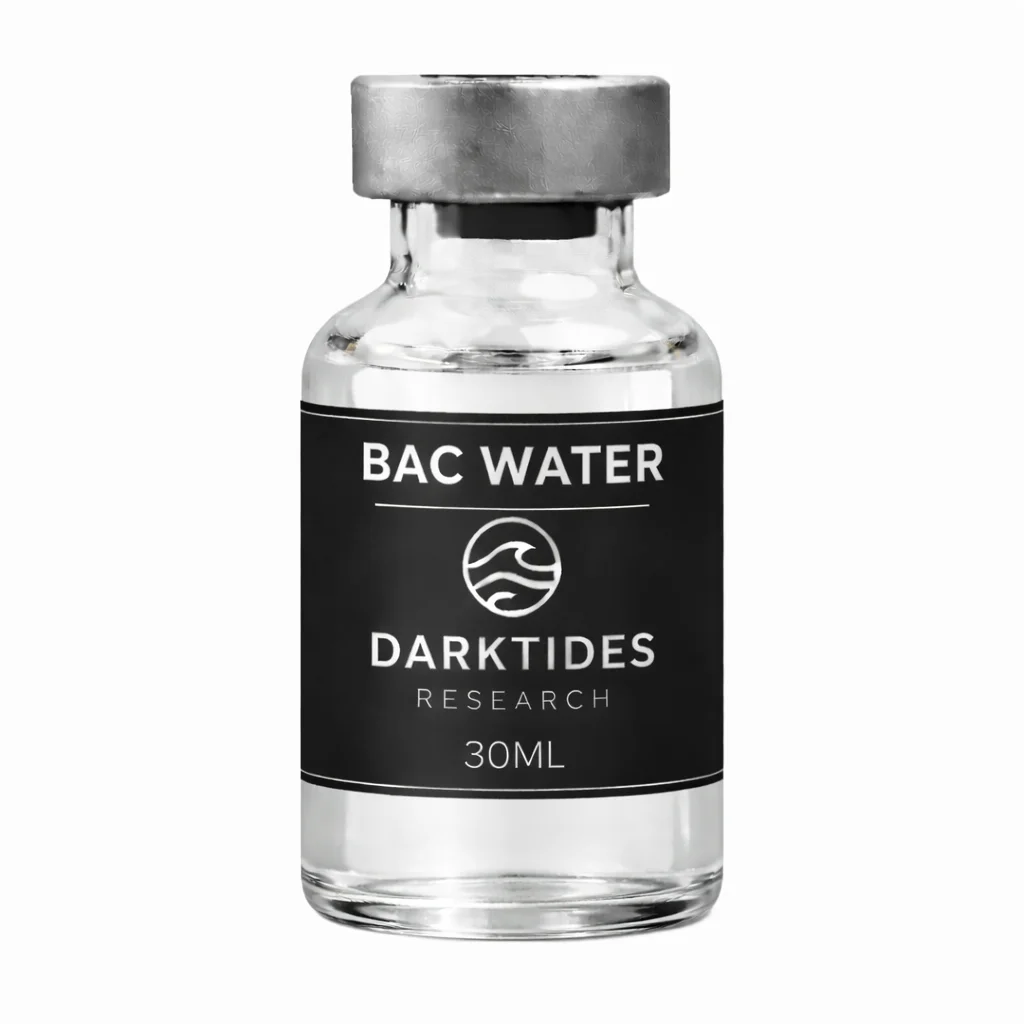
BAC water UK product for laboratory reconstitution and research workflows. Each pack contains 10 ready-to-use 30 mL vials formulated with Water for Injection and 0.9% benzyl alcohol. Review composition, storage and handling information before laboratory use.
For laboratory research use only.
BAC water UK — Laboratory Research Product
BAC water UK is presented for qualified laboratory, analytical and in vitro research. This bacteriostatic water is listed with product-specific technical information to help UK researchers assess identity, format and handling requirements before use in a controlled research environment.
- Product: BAC water
- Pack specification: 30 mL per vial, 10 vials per pack
- Intended use: Laboratory and in vitro research only
- Restriction: Not for human or veterinary use, consumption, diagnosis or treatment
Premium BAC Water 30mL — Sterile Bacteriostatic Water for Research Peptide Reconstitution
Product Overview
Premium BAC Water (Bacteriostatic Water) is a sterile, non‑pyrogenic solution consisting of Water for Injection (WFI) with 0.9% (9 mg/mL) benzyl alcohol added as a bacteriostatic preservative. It is supplied as a ready‑to‑use liquid in a multi‑dose sterile vial. Each pack contains ten vials, with each vial holding 30 mL of sterile bacteriostatic water. This product is manufactured exclusively for the reconstitution of lyophilized research compounds and for in vitro laboratory applications.
Key Specifications at a Glance:
Quantity: 30 mL per vial, 10 vials per pack
Form: Sterile, ready‑to‑use liquid
Composition: Water for Injection (WFI) with 0.9% Benzyl Alcohol (9 mg/mL)
Preservative: 0.9% Benzyl Alcohol
pH Range: 4.5–7.0
Sterilization: 0.22 µm filtration, aseptically filled
In‑Use Period: Up to 28 days after first puncture (with aseptic handling)
Storage: Controlled room temperature (15–25 °C / 59–77 °F)
Research Use Only: Not for human or animal injection or consumption
Understanding BAC Water: The Research Context
BAC Water is a specialized sterile water solution designed for multiple withdrawals in laboratory research settings. Unlike standard sterile water (which is intended for single use), BAC Water contains 0.9% benzyl alcohol as a bacteriostatic preservative that inhibits bacterial growth in the vial after it has been opened. This allows the vial to be used repeatedly over a period of up to 28 days when proper aseptic technique is followed.
Key Research Applications:
Reconstitution of lyophilized research peptides
Preparation of working solutions from lyophilized proteins and antibodies
Dilution of concentrated research reagents requiring an aqueous vehicle
Researchers utilize BAC Water in controlled laboratory settings to reconstitute lyophilized (freeze‑dried) research compounds in a safe and sterile environment. The bacteriostatic preservative maintains sterility during repeated use, making it particularly valuable for research protocols requiring multiple samplings from the same vial.
The Role of Benzyl Alcohol:
The 0.9% benzyl alcohol concentration (9 mg per mL) serves as a bacteriostatic agent, preventing the growth of contaminating bacteria in the solution after the vial has been opened. This allows for repeated withdrawals while maintaining sterility, provided aseptic technique is strictly maintained.
BAC Water vs. Sterile Water: Understanding the Difference
Researchers often ask about the distinction between BAC Water and standard sterile water. Understanding this difference is important for proper experimental design.
| Feature | BAC Water (Bacteriostatic) | Sterile Water (Preservative‑Free) |
|---|---|---|
| Container Type | Multi‑dose vial | Single‑dose vial |
| Preservative | 0.9% Benzyl Alcohol (9 mg/mL) | None |
| In‑Use Period | Up to 28 days after first puncture | Single use only; discard immediately |
| Best For | Multiple samplings, peptide reconstitution protocols | Single‑use applications |
| Cost Efficiency | More economical for repeated use | Higher cost per use for multiple applications |
Choosing the Right Water for Your Research:
BAC Water — Ideal for research peptide reconstitution when multiple samplings from the same vial are required over days or weeks.
Sterile Water (Preservative‑Free) — Appropriate for single‑use applications where the entire contents are used immediately and no preservative is desired.
Quality Assurance and Manufacturing Standards
Every batch of Premium BAC Water is manufactured under strict quality control standards to ensure sterility, consistency, and reliability for research applications.
Manufacturing Process:
Sterilization: Purified using a 0.22 µm filtration process
Filling: Aseptically filled into sterile vials
Quality Standards: Manufactured in ISO‑certified and GMP‑compliant facilities
Testing: Each batch undergoes sterility and endotoxin testing; lot‑specific Certificates of Analysis (CoA) are available
Quality Specifications:
| Parameter | Specification |
|---|---|
| Sterility | Sterile, non‑pyrogenic |
| pH | 4.5–7.0 |
| Preservative | 0.9% Benzyl Alcohol (9 mg/mL) |
| Container | Multi‑dose vial with sealed rubber stopper |
| Shelf Life | 24 months unopened |
Intended Use and Regulatory Status
Research Use Only
BAC Water is classified as a research reagent and is intended exclusively for in vitro laboratory use. This designation means the product is sold strictly for:
Peptide reconstitution — dissolving lyophilized research peptides
Protein preparation — diluting proteins for laboratory assays
Working solution preparation — creating stock solutions from lyophilized materials
Cell culture applications — as a solvent for certain research reagents
Analytical research — chemical analysis and characterization studies
Important Regulatory Notice
This product is not a drug, food, cosmetic, or medical device. Bodily introduction of any kind into humans or animals is strictly forbidden by law. The product should only be handled by licensed, qualified professionals working in appropriate laboratory facilities.
All product information provided is for educational and research purposes only and does not constitute medical advice or clinical recommendations.
Handling and Safety Guidelines
Professional Handling Required
BAC Water should only be handled by trained laboratory personnel wearing appropriate personal protective equipment (PPE), including:
Laboratory coat
Nitrile gloves
Safety goggles or face shield
Aseptic Technique Protocol
To maintain sterility and maximize the 28‑day in‑use period:
Before first use: Inspect vial for damage or turbidity. Discard if solution is discolored or contains particles.
Clean the stopper: Wipe the rubber stopper with a sterile alcohol swab before each puncture.
Use sterile needles/syringes: Always use sterile, single‑use needles and syringes.
Minimize punctures: Avoid unnecessary punctures to reduce contamination risk.
Proper withdrawal: Insert needle through the center of the stopper. Do not touch the needle to any non‑sterile surface.
Discard after 28 days: Do not use beyond 28 days after first puncture.
Reconstitution Protocol
When reconstituting lyophilized research peptides with BAC Water:
Allow the sealed BAC Water vial to reach room temperature (approximately 15‑30 minutes).
Clean the rubber stopper with an alcohol swab.
Using a sterile syringe, withdraw the calculated volume of BAC Water needed for your desired peptide concentration.
Inject the BAC Water slowly down the inner wall of the peptide vial to avoid foaming.
Gently swirl the vial — do not shake vigorously.
Allow complete dissolution before use.
Important Considerations:
Consult the peptide manufacturer’s datasheet for recommended reconstitution volume.
Store reconstituted peptide solutions refrigerated at 2‑8 °C and use within the manufacturer’s specified timeframe.
For long‑term storage, freeze aliquots of reconstituted peptide solutions (but not BAC Water itself).
Storage Guidelines:
Unopened vials: Store at controlled room temperature (15‑25 °C / 59‑77 °F). Protect from light.
Opened vials: Refrigerate after opening and use within 28 days.
Research Applications
BAC Water is used in various laboratory research contexts, primarily for reconstituting lyophilized research compounds. Typical applications include:
Peptide Reconstitution:
The primary research application for BAC Water is dissolving lyophilized (freeze‑dried) research peptides. The 0.9% benzyl alcohol concentration maintains sterility during repeated use, making it ideal for research protocols requiring multiple samplings over days or weeks.
Protein and Antibody Preparation:
BAC Water is used to prepare working solutions from lyophilized proteins and antibodies in laboratory research settings. The preservative maintains sterility during extended use protocols.
Working Solution Preparation:
Researchers use BAC Water to create stock solutions from lyophilized materials for various laboratory applications, including assay development, cell culture supplementation, and analytical standards preparation.
Laboratory Reagent Dissolution:
BAC Water serves as an aqueous vehicle for dissolving research reagents that require dilution or must be dissolved prior to use in laboratory experiments.
Peptide Stability Considerations:
Peptides are far more stable as lyophilized powders than in solution. Once in solution, they slowly degrade via hydrolysis and other chemical reactions regardless of the solvent used. The slightly acidic pH of BAC Water (around 5‑6) actually helps reduce base‑catalyzed hydrolysis for many sequences, modestly improving stability compared to neutral or alkaline solutions. Typical guidance for research peptides reconstituted in bacteriostatic water and stored refrigerated is a usable window of 2‑4 weeks.
What Makes This Product Different
Bacteriostatic Preservation for Multi‑Use
Unlike standard sterile water that must be discarded after a single use, BAC Water contains 0.9% benzyl alcohol that inhibits bacterial growth for up to 28 days after first puncture. This allows researchers to use a single vial multiple times, reducing waste and improving laboratory efficiency.
Optimal pH Range for Peptide Compatibility
With a pH range of 4.5–7.0, BAC Water is compatible with a wide range of research peptides and proteins. The slightly acidic to neutral pH is suitable for most research peptide reconstitution protocols.
GMP‑Certified Manufacturing
BAC Water is manufactured in ISO‑certified and GMP‑compliant facilities, ensuring consistent quality and sterility for research applications.
Multi‑Dose Vial Design
The multi‑dose vial is specifically designed for repeated withdrawals in laboratory settings. The rubber stopper provides a secure seal that maintains sterility when proper aseptic technique is used.
28‑Day In‑Use Period
When proper aseptic technique is followed, each vial maintains sterility for up to 28 days after first puncture, providing flexibility for extended research protocols.
Frequently Asked Questions for Researchers
What is the concentration of benzyl alcohol in BAC Water?
BAC Water contains 0.9% benzyl alcohol (9 mg/mL) as a bacteriostatic preservative.
How long can I use a vial after first puncture?
With proper aseptic handling, BAC Water can be used for up to 28 days after the first puncture. After this period, the vial should be discarded.
How should BAC Water be stored?
Store unopened vials at controlled room temperature (15‑25 °C / 59‑77 °F), protect from light, and keep in a dry place. After opening, refrigeration is recommended.
What is the pH range of BAC Water?
The pH typically falls between 4.5 and 7.0.
Is BAC Water suitable for all peptide reconstitution?
BAC Water is widely used for peptide reconstitution in research workflows. However, researchers should verify compatibility with their specific peptide, as some peptides may be sensitive to benzyl alcohol.
What is the difference between BAC Water and sterile water?
BAC Water contains 0.9% benzyl alcohol as a preservative and is supplied in multi‑dose vials for repeated use (up to 28 days). Sterile water contains no preservative and is supplied in single‑dose vials that must be discarded after one use.
Can BAC Water be used for cell culture applications?
Researchers should determine compatibility based on their specific experimental protocol. The benzyl alcohol preservative may affect certain cell culture systems.
What should I do if the solution appears discolored or contains particles?
Discard the vial immediately if the solution appears discolored or contains particles. Do not use.
Is BAC Water sterile?
Yes, BAC Water is sterile and non‑pyrogenic, manufactured using 0.22 µm filtration and aseptic filling processes.
What is the shelf life of unopened BAC Water?
Unopened BAC Water has a shelf life of approximately 24 months when stored properly at controlled room temperature.
Does BAC Water have a CAS number?
BAC Water is a mixture and does not have a unique CAS number. It consists of Water for Injection (CAS 7732‑18‑5) and 0.9% Benzyl Alcohol (CAS 100‑51‑6).
Final Notes for Laboratory Researchers
Premium BAC Water (30 mL, 10‑Pack) represents a high‑quality, sterile bacteriostatic water solution for qualified professionals conducting legitimate scientific research requiring peptide reconstitution, protein preparation, and other laboratory applications. With documented quality assurance, complete specifications, and appropriate packaging for research use, this product meets the standards expected by serious researchers.
The multi‑dose vial format is optimized for research applications requiring repeated withdrawals over an extended period. The 0.9% benzyl alcohol preservative maintains sterility for up to 28 days when proper aseptic technique is followed, providing flexibility and efficiency for laboratory research protocols.
For research use only. Not for human or animal injection. Handle only in appropriate laboratory facilities with proper safety equipment and training.


MAECENAS IACULIS
Vestibulum curae torquent diam diam commodo parturient penatibus nunc dui adipiscing convallis bulum parturient suspendisse parturient a.Parturient in parturient scelerisque nibh lectus quam a natoque adipiscing a vestibulum hendrerit et pharetra fames nunc natoque dui.
ADIPISCING CONVALLIS BULUM
- Vestibulum penatibus nunc dui adipiscing convallis bulum parturient suspendisse.
- Abitur parturient praesent lectus quam a natoque adipiscing a vestibulum hendre.
- Diam parturient dictumst parturient scelerisque nibh lectus.
Scelerisque adipiscing bibendum sem vestibulum et in a a a purus lectus faucibus lobortis tincidunt purus lectus nisl class eros.Condimentum a et ullamcorper dictumst mus et tristique elementum nam inceptos hac parturient scelerisque vestibulum amet elit ut volutpat.
Reviews
There are no reviews yet.