
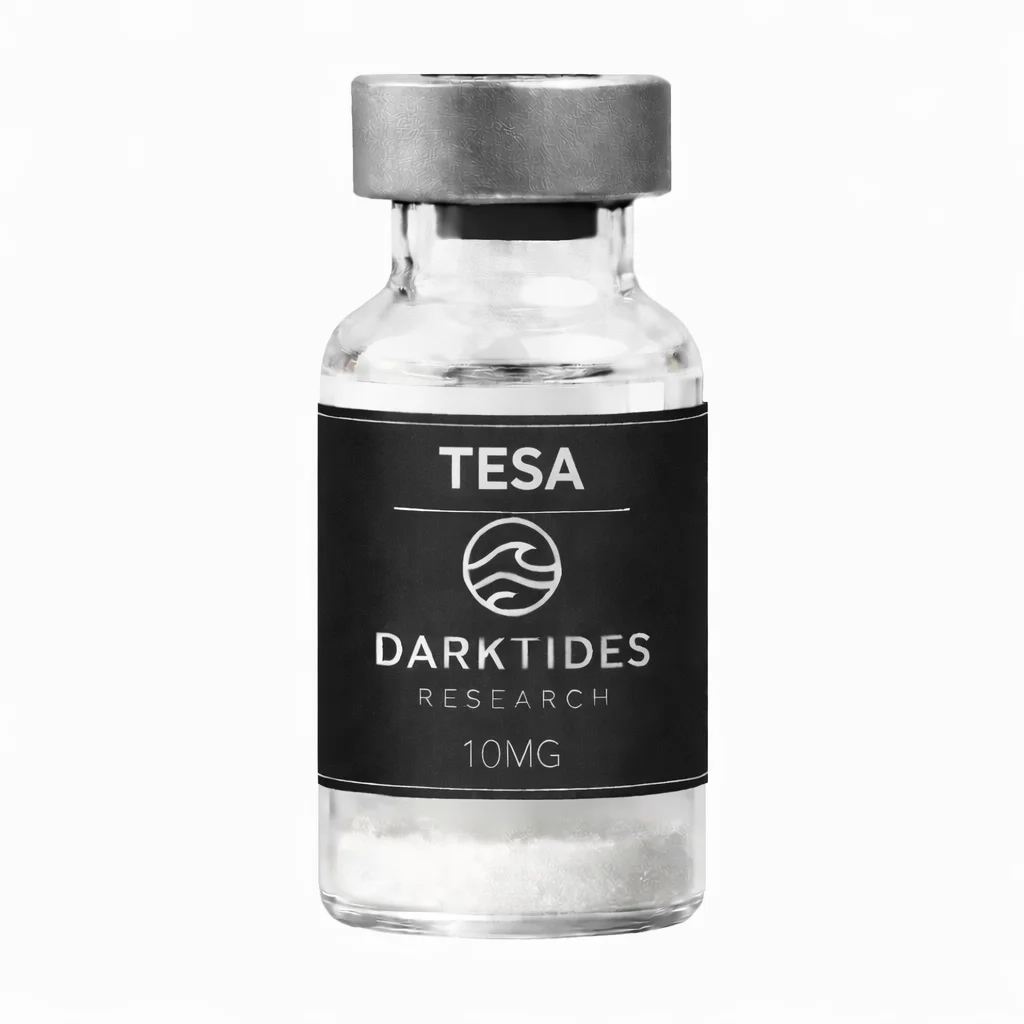
TESA 10mg
Original price was: £60.00.£50.00Current price is: £50.00.
TESA 10mg UK research peptide supplied as lyophilized material for controlled laboratory and in vitro investigation. Each pack contains 10 vials with 10 mg per vial. Review purity, molecular formula and handling specifications for research settings.
For research use only. Not for human or veterinary use.
TESA 10mg UK — Laboratory Research Product
TESA 10mg UK is presented for qualified laboratory, analytical and in vitro research. This GHRH-analog research peptide is listed with product-specific technical information to help UK researchers assess identity, format and handling requirements before use in a controlled research environment.
- Product: TESA 10mg
- Pack specification: 10 mg per vial, 10 vials per pack
- Intended use: Laboratory and in vitro research only
- Restriction: Not for human or veterinary use, consumption, diagnosis or treatment
Premium TESA 10MG Research Peptide — High-Purity GHRH Analog for Laboratory Use
Product Overview
Premium TESA (Tesamorelin) 10MG is a research-grade synthetic analog of growth hormone-releasing hormone (GHRH). It is supplied as a sterile lyophilized powder in sealed vials. Each package contains ten vials, with each vial holding 10mg of the research compound. This product is manufactured exclusively for scientific investigation and in vitro laboratory experimentation.
Key Specifications at a Glance:
Quantity: 10mg per vial, 10 vials per pack
Form: Lyophilized (freeze-dried) powder
Purity: ≥98% verified by third-party testing
Molecular Formula: C₂₂₁H₃₆₆N₇₂O₆₇S
Molecular Mass: 5135.9
CAS Number: 218949-48-5
Sequence: 44-amino acid GHRH analog with trans-3-hexenoic acid modification
Synonyms: TH9507, Tesamorelin acetate
Research Use Only: Not for human or animal consumption
Understanding TESA 10MG: The Research Context
TESA (Tesamorelin) is a synthetic 44-amino acid peptide analog of growth hormone-releasing hormone (GHRH). It was specifically engineered with a trans-3-hexenoic acid group at the N-terminus, a modification that confers enhanced resistance to enzymatic degradation compared to native GHRH. This structural enhancement makes TESA a more stable and durable research tool for studying the GHRH-GH-IGF-1 axis.
Key Research Interests:
GHRH receptor (GHRHR) activation and signaling pathways
Growth hormone (GH) and IGF-1 axis regulation
Metabolic research and visceral adipose tissue studies
Pituitary somatotroph function
In vitro cell culture investigations
Researchers utilize TESA 10MG in controlled laboratory settings to study the growth hormone axis and its role in metabolic regulation. The peptide is of particular interest to investigators focused on endocrinology, metabolic disorders, and the fundamental mechanisms of GHRH receptor pharmacology.
The Significance of GHRH Research:
Growth hormone-releasing hormone (GHRH) is a hypothalamic peptide hormone that stimulates the synthesis and release of growth hormone from the anterior pituitary. The GHRH-GH-IGF-1 axis plays a critical role in:
Growth and development
Metabolic regulation and body composition
Fat distribution, particularly visceral adipose tissue
Cellular repair and regeneration
TESA serves as a stabilized research tool for studying this axis, offering enhanced stability over native GHRH for more consistent experimental results.
TESA 10MG Research Applications
TESA is used in various laboratory research contexts, primarily focused on endocrine signaling and metabolic regulation. Typical applications include:
GHRH Receptor (GHRHR) Signaling Studies:
The primary research interest in TESA revolves around its selective activation of GHRH receptors. Researchers use TESA to study:
GHRHR binding affinity and activation kinetics
Receptor signaling pathways (cAMP/PKA)
GHRHR regulation and desensitization mechanisms
Comparative studies with native GHRH and other analogs
Growth Hormone and IGF-1 Axis Research:
TESA stimulates physiologic GH secretion, making it valuable for:
GH pulse dynamics studies
IGF-1 production and regulation
Feedback mechanisms in the GH/IGF-1 axis
Age-related changes in GH secretion
Metabolic and Adipose Tissue Research:
TESA has been studied for its effects on metabolic parameters, particularly visceral adipose tissue. Research applications include:
Visceral adiposity metabolism
Lipid profile modulation
Body composition studies in research models
Metabolic syndrome pathways
Pituitary Cell Culture Studies:
Researchers use TESA in controlled cell culture systems to investigate:
Somatotroph (GH-producing cell) function
Pituitary cell signaling pathways
GH synthesis and secretion dynamics
GHRHR expression and regulation
GPCR Signaling Research:
The GHRH receptor is a prototypical class B GPCR. TESA serves as a research tool for:
GPCR activation mechanisms
Gs protein coupling and signaling
Adenylyl cyclase activation
cAMP response element (CRE) transcription
Third-Party Testing and Quality Assurance
Every batch of Premium TESA 10MG undergoes rigorous independent analytical testing to verify identity, purity, and consistency. This third-party testing ensures that researchers receive a product that meets strict quality specifications before it is approved for release.
The testing process includes:
Identity verification through mass spectrometry
Purity analysis using high-performance liquid chromatography (HPLC)
Batch-to-batch consistency checks
Residual solvent analysis to confirm complete lyophilization
With a verified purity of ≥98% as confirmed by HPLC, TESA 10MG meets the high standards required for serious laboratory research applications. Each vial contains only the lyophilized research compound with no unnecessary additives, fillers, or excipients. Batch‑specific Certificates of Analysis (CoA) are available upon request.
Chemical and Physical Properties
Molecular Characteristics
TESA is a 44-amino acid synthetic peptide with an N-terminal trans-3-hexenoic acid modification for enhanced stability.
Detailed Molecular Information:
Molecular Formula: C₂₂₁H₃₆₆N₇₂O₆₇S
Molecular Mass: 5135.9 daltons
CAS Number: 218949-48-5
Purity: ≥98% (HPLC)
Appearance: White to off‑white lyophilized powder
Structural Features:
44-amino acid linear peptide
N-terminal trans-3-hexenoic acid modification (DPP-IV resistance)
Contains sulfur (cysteine residues)
Full GHRH amino acid sequence preserved
The trans-3-hexenoic group at the N-terminus protects the peptide from dipeptidyl peptidase-IV (DPP-IV) degradation, giving it a longer half-life than native GHRH. This modification is crucial for maintaining stability in research applications.
Physical Form and Storage
The product is supplied as a lyophilized (freeze-dried) powder within a sterile, sealed vial. Lyophilization preserves the chemical integrity of the peptide by removing water content while maintaining the compound’s structure.
Recommended Storage Conditions:
Store lyophilized powder at -20°C (-4°F) or below for long-term preservation
Protect from light exposure
Keep desiccated to prevent moisture absorption
Allow vial to reach room temperature before opening to avoid condensation
Avoid repeated freeze-thaw cycles once reconstituted
Stability Considerations:
Short-term storage (weeks) can be maintained at 0-4°C in a dry environment. For extended preservation, -20°C storage under dry conditions is recommended. Lyophilized products stored at -20°C have a shelf life of up to 24 months.
Once reconstituted with an appropriate sterile solvent, the solution should be used promptly according to laboratory protocols.
Intended Use and Regulatory Status
Research Use Only
TESA 10MG is classified as a research chemical and is intended exclusively for laboratory and in vitro experimentation. This designation means the product is sold strictly for:
In vitro testing — experiments conducted in controlled laboratory environments
Cell culture studies — investigating GHRH receptor signaling in pituitary cell lines
Receptor binding assays — studying GHRHR interactions
Endocrine research — investigating GH/IGF-1 axis regulation
Metabolic research — studying lipid metabolism and body composition models
Analytical research — chemical analysis and characterization studies
Scientific investigation — basic research into GHRH analog structure and function
Important Regulatory Notice
This product is not a drug, food, cosmetic, or medical device. Bodily introduction of any kind into humans or animals is strictly forbidden by law. The product should only be handled by licensed, qualified professionals working in appropriate laboratory facilities.
The supplier is a chemical supplier, not a compounding pharmacy or outsourcing facility under Sections 503A or 503B of the Federal Food, Drug, and Cosmetic Act. All product information provided is for educational and research purposes only and does not constitute medical advice or clinical recommendations.
Handling and Safety Guidelines
Professional Handling Required
TESA 10MG should only be handled by trained laboratory personnel wearing appropriate personal protective equipment (PPE), including:
Laboratory coat
Nitrile gloves
Safety goggles or face shield
Appropriate respiratory protection if aerosolization is possible
Reconstitution Protocol
For laboratory use, the lyophilized powder should be reconstituted with a sterile, compatible solvent. Standard practice includes:
Allow the sealed vial to reach room temperature — approximately 15-30 minutes
Clean the rubber stopper with an alcohol swab
Add the calculated volume of solvent to achieve desired concentration
Gently swirl or roll the vial between palms — do not shake vigorously to avoid foaming
Allow complete dissolution before use — this typically takes 2-5 minutes
Reconstitution Example for TESA 10MG:
For researchers needing a 10mg/mL working solution, add 1mL of sterile solvent to the 10mg vial. For a 5mg/mL solution, add 2mL of solvent. For a 2mg/mL solution, add 5mL of solvent. Always verify calculations before proceeding with experiments.
Solvent Considerations:
TESA is water-soluble. Researchers should determine the appropriate solvent based on their specific experimental protocol. Common options include sterile water for injection, bacteriostatic water, or buffered solutions such as phosphate-buffered saline (PBS) at neutral pH.
Disposal Considerations
Dispose of TESA 10MG and any contaminated materials in accordance with federal, state, and local regulations for chemical waste disposal. Do not dispose of in regular trash or down drains unless permitted by local guidelines.
What Makes This Product Different
Enhanced Stability for Research Applications
Unlike native GHRH, which degrades rapidly, TESA incorporates a trans-3-hexenoic acid modification that protects the peptide from DPP-IV degradation. This enhanced stability allows researchers to achieve more consistent results across extended experimental timelines.
Well-Characterized Research Tool
TESA has been extensively studied in research settings, with well-defined pharmacokinetics and receptor pharmacology. This characterization provides researchers with a reliable reference material for GHRH receptor studies.
Optimal 10MG Research Quantity
The 10mg vial size is ideal for:
Preliminary and pilot studies requiring smaller quantities
Dose-finding experiments across multiple concentrations
Precise handling for low-concentration protocols
Cost-effective initial investigations before scaling up
Rigorous Quality Control
Unlike research chemicals sold without verification, TESA 10MG comes with documented third-party testing for every batch, including HPLC purity analysis and mass spectrometry identity verification. This commitment to quality assurance gives researchers confidence in the consistency and reliability of their experimental results. TESA 10mg
Batch Traceability
Each package of TESA 10MG includes batch identification numbers that allow researchers to trace their material back to original manufacturing and testing records. This traceability is essential for reproducible research and quality documentation. TESA 10mg
Frequently Asked Questions for Researchers
What is the purity level of TESA 10MG?
Each batch is tested to verify purity of ≥98% via HPLC, with identity confirmed by mass spectrometry. Individual certificates of analysis are available upon request.
What is the significance of the CAS number 218949-48-5?
The CAS number is a unique identifier for Tesamorelin, allowing researchers to verify they are working with the correct chemical compound when ordering or referencing the peptide in publications. TESA 10mg
What is the mechanism of action of TESA?
TESA is a GHRH analog that selectively binds to and activates GHRH receptors (GHRHR) on pituitary somatotroph cells, stimulating growth hormone synthesis and release.
How should the lyophilized powder be stored?
Store at -20°C or below, protected from light and moisture. Avoid repeated freeze-thaw cycles once reconstituted. Short-term storage (weeks) can be at 0-4°C.
What solvent should be used for reconstitution?
TESA is water-soluble. Researchers should determine the appropriate solvent based on their specific experimental protocol. Common options include sterile water for injection, bacteriostatic water, or buffered solutions such as PBS at neutral pH. TESA 10mg
Is this product sterile?
The lyophilized powder is manufactured under aseptic conditions, but researchers should follow standard laboratory practices for handling research chemicals. For cell culture applications, additional filtration using a 0.22-micron filter may be appropriate.
What research applications is TESA used for?
TESA is studied in GHRH receptor signaling, GH/IGF-1 axis regulation, metabolic research, visceral adipose tissue studies, and endocrine systems bench science in laboratory cell culture and research models. TESA 10mg
Can TESA be used in combination with other research peptides?
Researchers should determine compatibility based on their specific experimental design. Standard laboratory practice includes testing interactions in control experiments before full-scale implementation.
Final Notes for Laboratory Researchers
Premium TESA 10MG represents a high-purity research tool for qualified professionals conducting legitimate scientific investigations into GHRH receptor signaling, GH/IGF-1 axis regulation, metabolic pathways, and related endocrine fields. With documented third-party testing, complete chemical specifications, and appropriate packaging for laboratory use, this product meets the standards expected by serious researchers. TESA 10mg
The enhanced stability conferred by the trans-3-hexenoic acid modification makes TESA a more durable research tool than native GHRH, supporting consistent results across extended experimental timelines. The 10mg vial size is specifically optimized for smaller-scale experiments, preliminary studies, and research requiring precise handling.
For research use only. Not for human or animal consumption. Handle only in appropriate laboratory facilities with proper safety equipment and training. TESA 10mg


Reviews
There are no reviews yet.